Technology IELTS Speaking Part 2 & 3: Sample Answers, Cue Cards & Tips
Practice Technology IELTS Speaking Part 2 and 3 with sample cue cards, answers, and vocabulary. Learn how to discuss technology confidently in IELTS Speaking Part 2.
Technology is a frequent theme in IELTS Speaking Part 2, where you’re asked to give a long answer—typically 1–2 minutes—on a given cue card. The questions often involve describing a device, an app, or how technology impacts your life.
Compared to IELTS Speaking Part 1, which focuses on your daily habits, Part 2 requires deeper descriptions, personal stories, and thoughtful opinions.
This is your complete guide to technology topics IELTS Speaking Part 2 and 3, including common cue cards, follow-up questions, along with sample answers, vocabulary, and pro tips.
If you're preparing for simpler questions like “What devices do you use daily?” check out our Technology IELTS Speaking Part 1 Guide.
For more IELTS topics beyond technology, check out:
Common Cue Cards for Technology IELTS Speaking Part 2
- Describe a piece of technology you use every day.
- Describe an app or website you often use.
- Describe a time when you had a problem with technology.
- Describe a gadget that has made your life easier.
- Describe a piece of technology you would like to have in the future.
Sample Answer 1: Describe a piece of technology you use every day
Cue Card:
- What it is
- How you use it
- How it helps you
- And explain why it is important to you
Sample Answer:
“Well, the piece of technology I use every day is definitely my smartphone. It’s a Samsung Galaxy, and I rely on it from the moment I wake up until I go to bed.I use it for many things—checking the news, setting alarms, attending online classes, and chatting with my friends. I also use apps like Google Maps when I travel and Spotify to listen to music while commuting.
This gadget saves me a lot of time. For instance, instead of going to a bank, I use mobile banking apps. I can also shop online, order food, and even study through e-learning platforms.
Honestly, it’s hard to imagine life without my phone. While some might say people are too dependent on technology, I believe it’s become an essential tool for modern life.”
Sample Answer 2: Describe an app you often use
Cue Card:
- What it is
- How you discovered it
- What you use it for
- And explain why it is useful to you
Sample Answer:
“One app I use almost every day is Duolingo, which is a language-learning app. I first heard about it from a friend who was using it to study Spanish.I mainly use it to practice English vocabulary and sometimes try other languages just for fun. The app sends daily reminders, and the lessons are designed like games, so it doesn’t feel boring.
It’s incredibly useful because I can study anywhere—on the bus, during breaks, or even while waiting in line. Plus, it’s free, which is a huge bonus.
I think apps like this show the real advantages of technology, that is, making education more accessible and flexible. But, of course, the downside is that sometimes I get distracted by notifications from other apps.”
IELTS Speaking Part 3: Technology Topics
In Part 3, the examiner usually asks deeper, more abstract questions about the impact of technology on society, education, work, and relationships. You’ll need to give longer, more thoughtful answers, using opinions, comparisons, and real-life examples.
Common Questions for Technology IELTS Speaking Part 3
- How has technology changed the way we communicate?
- Do you think technology has made people’s lives easier or more complicated?
- What are the advantages and disadvantages of modern technology in the workplace?
- Do older people and younger people use technology differently?
- How do you think technology will change in the future?
- What problems can technology cause in society?
Sample Answers for IELTS Speaking Part 3 Technology Topic
Q: How has technology changed the way we communicate?
A: “Technology has completely transformed communication. Instead of sending letters, people now use instant messaging, video calls, and emails. It’s much faster and more convenient. However, the downside is that people sometimes communicate less face-to-face, which can affect real-life social skills.”
Q: Do you think technology has made life easier or more complicated
A: “Honestly, both. On one hand, it’s more convenient—we can shop online, work remotely, and access information anytime. But on the other hand, it can be overwhelming because of information overload and constant notifications.”
Q: What are the advantages and disadvantages of modern technology in the workplace?
A: “The main advantage is productivity. People can collaborate with colleagues globally using tools like Zoom or Slack. However, the disadvantage is that employees are expected to be constantly available, even outside working hours, which can increase stress.”
Q: How do older and younger people use technology differently?
A: “Younger people are usually more comfortable with digital devices and social media, while older generations might struggle with new apps or online services. But I think this gap is shrinking as more elderly people start using smartphones and learning digital skills.”
Q: How do you think technology will change in the future?
A: “I believe AI and automation will become even more common. Tasks like driving, customer service, or even teaching might be handled by robots or AI. It’ll make life more efficient but could also lead to job losses in some industries.”
Vocabulary for Technology IELTS Speaking Part 2
Positive Vocabulary
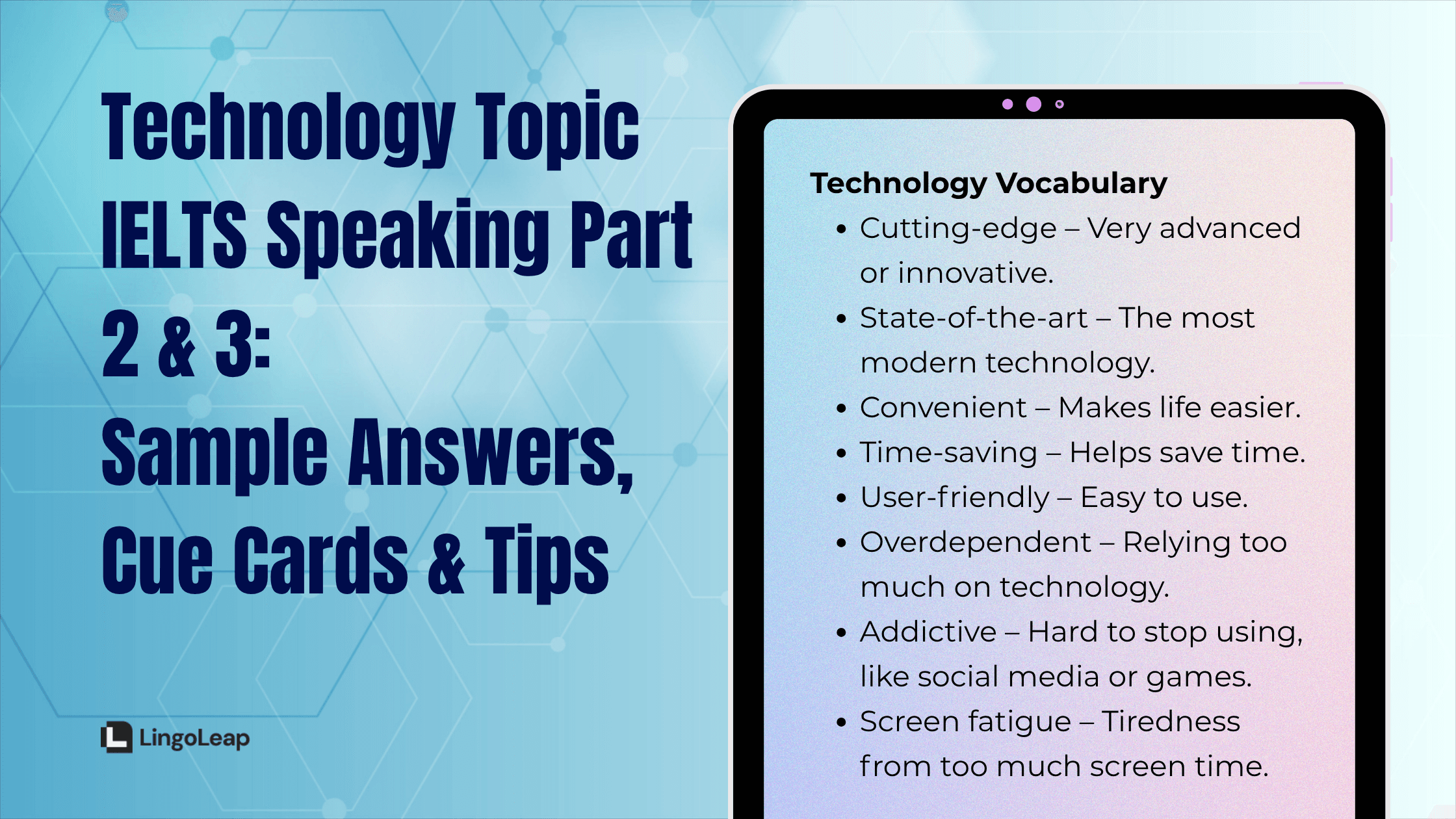
- Cutting-edge – Very advanced or innovative.
- State-of-the-art – The most modern technology.
- Convenient – Makes life easier.
- Time-saving – Helps save time.
- Efficient – Productive and effective.
- Portable device – Something easy to carry, like smartphones or tablets.
- User-friendly – Easy to use.
Negative Vocabulary
- Overdependent – Relying too much on technology.
- Addictive – Hard to stop using, like social media or games.
- Privacy concerns – Worries about data security.
- Screen fatigue – Tiredness from too much screen time.
- Glitches – Small errors or problems with technology.
- Cybercrime – Crimes like hacking or fraud done online.
Neutral Vocabulary & Common Expressions
- Smart device – Any connected electronic, like a phone or smartwatch.
- E-waste – Electronic waste or discarded devices.
- Cloud storage – Saving files online instead of a physical drive.
- Digital tools – Apps, websites, or online services used for tasks.
- Go online / Stay connected – Use the internet.
- Scroll through – Browse on a phone or website.
- Install / Download / Upload – Common tech-related actions.
How to Talk About Advantages and Disadvantages of Technology in IELTS Speaking
✔️ Advantages:
- Makes life more convenient (e.g., online banking, food delivery)
- Helps people stay connected (social media, video calls)
- Enables remote work and study
- Saves time and increases productivity
❌ Disadvantages:
- People become too dependent on devices
- Privacy issues (data breaches, tracking)
- Less face-to-face communication
- Screen addiction and health problems like eye strain
✅ Use both sides in your answer to sound balanced and thoughtful.
Pro Tips for IELTS Speaking Part on Technology
- ✔️ Use specific examples to explain how the technology affects your life. Mention devices, apps, or situations.
- ✔️ Describe both feelings and general opinions. Talk about why you love or hate the technology.
- ✔️ Compare past and present. “In the past, we used to… but now…”
- ✔️ Explain both advantages and disadvantages where possible. IELTS examiners love balanced answers.
- ✔️ Use a variety of vocabulary, including action verbs (download, stream, install) and adjectives (cutting-edge, user-friendly, addictive).
Common Mistakes to Avoid
- ❌ Give vague answers like “I use my phone” without details.
- ❌ Forgetting to explain the reasons for your opinions.
- ❌ Not covering both the positive and negative sides when asked.
Summary: Technology IELTS Speaking Questions
Technology is a flexible topic that often appears in all parts of the IELTS Speaking Task. The key difference is that Part 1 asks simple questions like your daily usage of technology, Part 2 requires more storytelling, opinions, and detailed descriptions, whereas Part 3 asks broader and more abstract questions, expecting longer and thoughtful answers. If you haven’t checked it yet, read our guide to Technology IELTS Speaking Part 1 for everyday questions about your tech habits.
Ready to Practice Technology Topics in IELTS Speaking?
Whether you describe your phone, a useful app, or how technology has changed your life, use rich vocabulary, clear examples, and discuss both sides—the advantages and disadvantages of technology in IELTS Speaking—to get a higher score.
Practice makes perfect. With LingoLeap’s IELTS Speaking AI Tutor, you can practice real IELTS questions, get AI-powered feedback, and improve faster.
👉 Start your free trial at LingoLeap and upgrade your speaking skills today!